“None are more hopelessly enslaved than those who falsely believe they are free.”
—Johann Wolfgang von Goethe (1749–1832)
by Joseph Murphy, Director of Strategic Partnerships
As the United States approaches its 250th anniversary, freedom is everywhere. It is praised, invoked, and assumed. Goethe’s line lingers because it interrupts assumptions. He uses “enslaved” metaphorically, as a condition of unexamined freedom, when people mistake habit or comfort for agency. It suggests that freedom is not simply something we possess, but something we can misunderstand—or slowly lose sight of—without realizing it.
That tension shaped Freedom and Its Futures, a Community Conversations series developed by Humanities New York (HNY) in partnership with Brooklyn Public Library (BPL). The series grew out of ongoing conversations about how we might address civic fatigue, trust, and democratic life, alongside BPL’s “Freedom Falls” programming and its resonance with the broader moment of America 250. Rather than begin with commemoration or diagnosis from a distance, the series starts closer to lived experience—with history as it actually unfolded, and with democracy as people encounter it now: uneven, pressured, unfinished.
The aim is not to recover a lost past or map a theory of decline. It is to sharpen awareness in the present: to notice small shifts before they harden into habits, and to recognize how democratic erosion often arrives quietly, through inattention rather than force.
Just as importantly, the series asks what tools people might use to imagine, sustain, and even expand freedom in the years ahead—habits of listening, shared inquiry, and collective responsibility that can be practiced now. The stance is clear-eyed but not still. It assumes that democracy erodes quietly when unattended, and that it is renewed through deliberate, everyday acts.
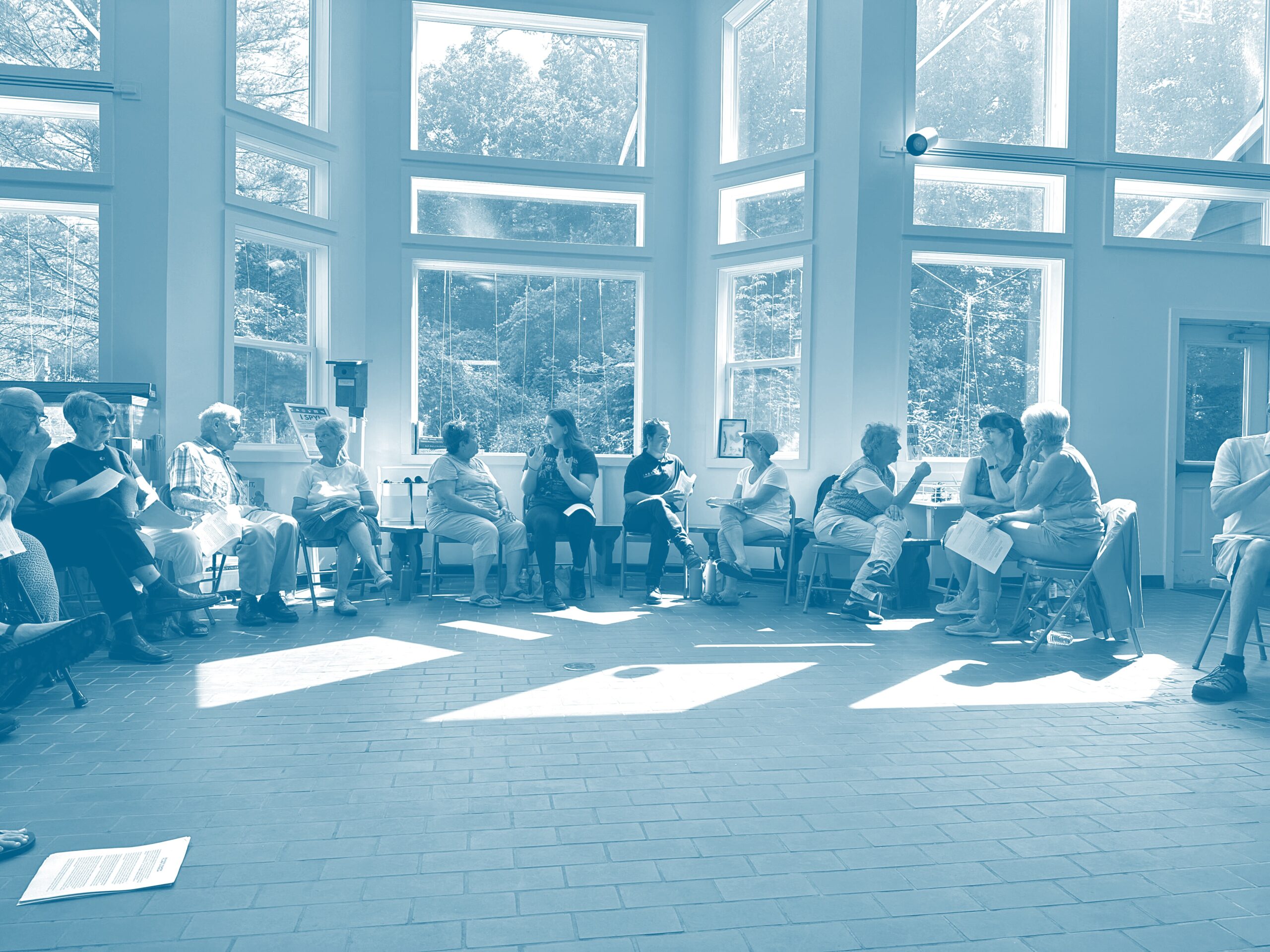
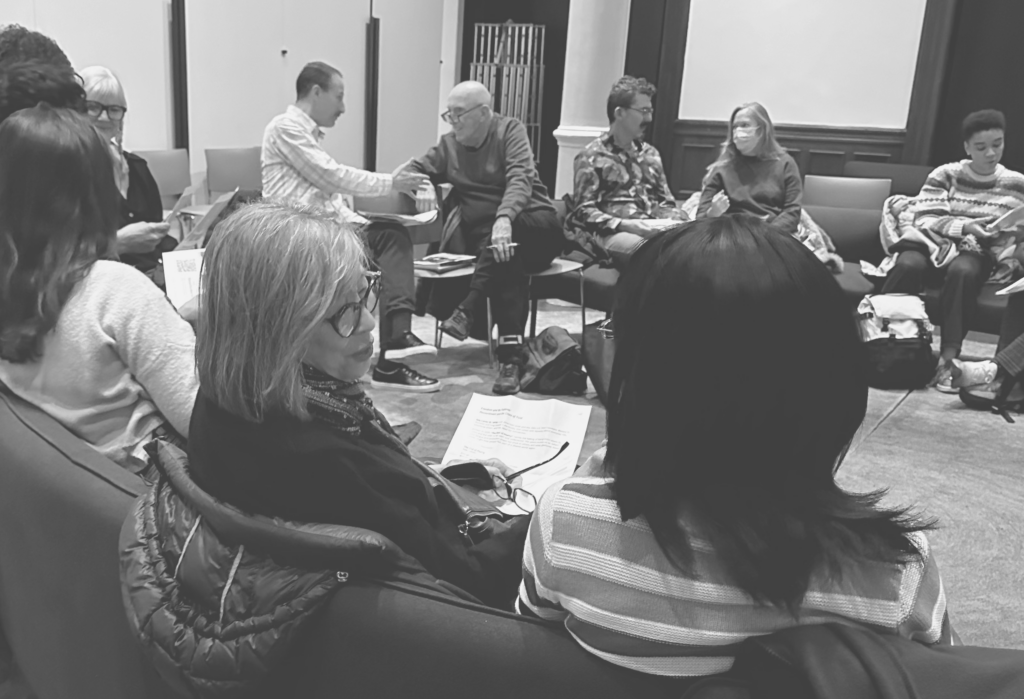
Community Conversations make room for that work. They are informal, open gatherings—no homework, no expertise required.
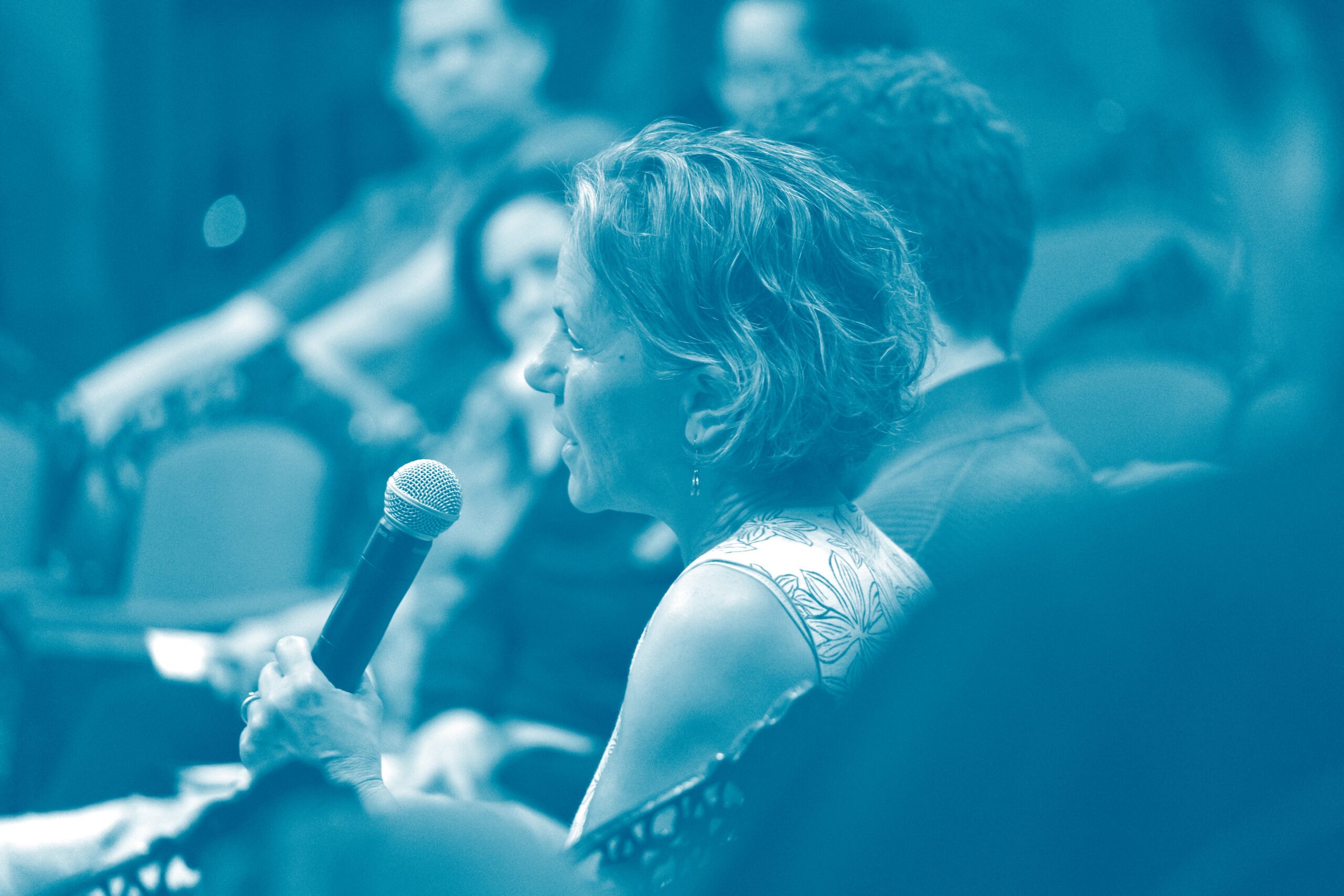
A trained facilitator introduces a short text or image, then steps back. Participants shape the conversation together. The emphasis is not agreement, but attention. Often, people are surprised by how much thinking is already in the room.
Conversation changes the pace.
It creates room.
It allows ideas to surface.


The first session, Late Empire and the Erosion of Democracy, took place in November 2025 at the Brooklyn Public Library’s Central Library. Here, “late empire” named a mood, not a historical claim. Participants gathered around Franz Kafka’s parable “Before the Law,” alongside a contemporary photograph. The discussion lingered on thresholds, permission, justice, and hesitation. Why do people wait, even when access appears open? Why does civic life feel risky, even when participation is invited? One participant evoked “a bird that won’t leave the cage once the door opens.” The event closed with a shared sense that trust is rebuilt slowly, through repeated encounters, in ordinary places.
The second session, Ressentiment and the Crisis of Trust, was held in January 2026 at the Center for Brooklyn History. Ressentiment—more than simple resentment—names what happens when frustration turns inward, hardening into grievance, mistrust, and withdrawal. The anchors were Ada Limón’s poem “The End of Poetry” and Edward Hopper’s painting Automat. At one point, a participant asked: “What does this have to do with democracy?” The skeptical question shifted the room. People answered with experiences rather than arguments: loneliness, access without belonging, the effort required to feel seen. Freedom came into view as something practiced, not declared.


The series continues next week.
On February 11, Market Thinking and the Erosion of the Common Good will convene at the Center for Brooklyn History.
Registration is open.
Anchored by an excerpt from Zadie Smith’s essay “Joy,” the conversation promises ideas like choice, efficiency, and justification of everyday decisions. It’s the next opportunity to join the series, whether you’ve attended before or are just stepping in.
In a public culture shaped by speed and performance, Community Conversations offer something steadier: time to think in the presence of others, without pressure to persuade or produce.
Libraries are essential to this work. They remain among the few institutions that welcome people without demanding agreement or allegiance—and in doing so, help sustain the trust and agency democratic life depends on.
At HNY, we believe the humanities matter because they give people shared ways to notice, question, and care for the world they inhabit together. In a moment when freedom is often asserted rather than examined, this work offers something quieter: the chance to keep working on freedom, together, in public.